 By Saurav Mehra
 A motorcycle can feel perfectly under control until one sudden moment changes everything. A car brakes ahead, a dog runs across the road, rain makes the road slippery, sand appears near a turn, or a scooter cuts your lane without warning. Your hand quickly grabs the front brake, your foot presses the rear brake, and in that fraction of a second, tyre grip decides whether the bike stops safely or skids.
This is where ABS becomes important. In India, two-wheeler riders face mixed road conditions every day—smooth highways, broken city roads, gravel near construction zones, wet flyovers, oily patches near markets, and unpredictable traffic. Braking is not only about how strong the brakes are; it is also about how much grip the tyres can maintain. If a wheel locks during panic braking, the rider can lose control very quickly.
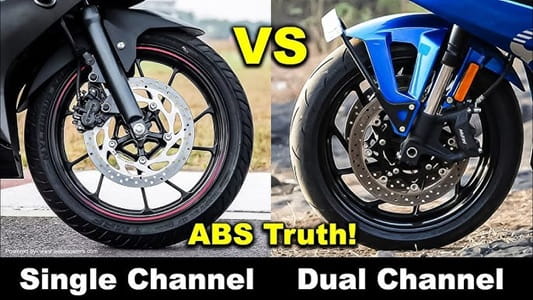
Many bikes today come with either single channel ABS or dual channel ABS. But buyers often get confused. The showroom person may say, “Single ABS is enough,” while a friend may say, “Always buy dual ABS.” The truth is simple: both are better than no ABS, but dual channel ABS gives wider protection because it works on both wheels. Understanding the difference can help you choose the safer bike for your riding style.
What Is ABS in a Motorcycle?
ABS stands for Anti-lock Braking System. Its main job is to prevent the wheel from locking during hard braking.
When a wheel locks, it stops rotating while the bike is still moving. This can cause the tyre to skid. On a motorcycle, a skid can quickly lead to loss of balance, especially if the front wheel locks.
ABS uses wheel sensors and a control unit to detect when a wheel is about to lock. It then quickly adjusts brake pressure so the tyre keeps rotating and maintains grip.
In simple words, ABS helps you brake hard without losing control as easily as a non-ABS bike.
Why ABS Matters on Indian Roads
Indian roads are unpredictable. You may start on a dry road and suddenly hit a wet patch near a leaking tanker. A clean-looking road may have dust, sand or gravel. In monsoon, painted lane markings and metal covers can become slippery. In cities, panic braking happens often because traffic movement is not always disciplined.
ABS gives riders a safety backup during such moments. It does not make careless riding safe, but it reduces the chance of wheel lock during emergency braking.
For new riders, ABS can be even more helpful because they may not yet have perfect braking control. For experienced riders, ABS adds protection when conditions change suddenly.
What Is Single Channel ABS?
Single channel ABS means the ABS system works on only one wheel, usually the front wheel. The front brake is the most important brake on a motorcycle because most braking force comes from the front wheel during stopping.
In a single channel ABS bike, if you brake hard with the front brake, the system helps prevent front-wheel lock. This is a big advantage compared to a bike with no ABS.
However, the rear wheel does not get ABS protection. If you press the rear brake too hard, the rear wheel can still lock and skid.
Single channel ABS is commonly found in entry-level bikes, commuter motorcycles and budget-friendly variants.
What Is Dual Channel ABS?
Dual channel ABS means the system works on both the front and rear wheels. It has control over braking at both ends, so it can reduce the risk of front-wheel lock and rear-wheel lock during hard braking.
This gives better balance and stability, especially during panic braking, wet-road braking, high-speed braking or braking with a pillion.
Dual channel ABS is usually found in premium commuter bikes, sports bikes, touring motorcycles, performance bikes and higher variants of some popular models.
It is more expensive than single channel ABS, but it offers stronger safety coverage.
Main Difference Between Single and Dual Channel ABS
The main difference is simple: single channel ABS protects only the front wheel, while dual channel ABS protects both front and rear wheels.
Single channel ABS is like having a safety guard on the most important brake. Dual channel ABS is like having safety support on the full braking system.
In real riding, this matters because riders often use both brakes together. During panic braking, many riders press the rear brake hard without thinking. On a single channel ABS bike, the front may stay controlled, but the rear can still lock and slide.
On a dual channel ABS bike, both wheels get better control, giving the rider more confidence and stability.
Why Front-Wheel ABS Is So Important
When you brake, the weight of the bike shifts forward. This increases load on the front tyre and gives it more grip. That is why the front brake provides most of the stopping power.
If the front wheel locks, the motorcycle can lose balance very quickly. A front-wheel skid is difficult to recover, especially for average riders.
This is why even single channel ABS is useful. It protects the most critical wheel and can prevent many dangerous falls during hard braking.
For budget buyers, single channel ABS is still much better than no ABS.
Why Rear-Wheel ABS Also Matters
Some riders think rear-wheel ABS is not very important because the rear brake gives less stopping power. But the rear wheel plays a big role in stability.
During panic braking, the rear wheel becomes lighter because weight shifts forward. This makes it easier to lock. If the rear locks, the bike may slide sideways, especially on wet roads, gravel or painted surfaces.
A rear skid may be more controllable than a front skid, but it can still cause a fall. With a pillion, luggage or sudden braking in traffic, rear-wheel stability becomes even more important.
Dual channel ABS reduces this risk by managing both wheels.
Single Channel ABS: Advantages
Single channel ABS is more affordable. It keeps the bike price lower, which matters a lot in India’s commuter market. It also gives important front-wheel protection, which is the most critical part of braking safety.
For low-speed city riding, basic commuting and budget-focused buyers, single channel ABS can be a practical safety upgrade.
It is also lighter and simpler than dual channel ABS. Maintenance cost may be slightly lower because the system has fewer components.
If your budget is tight, single channel ABS is still a sensible choice over a non-ABS bike.
Single Channel ABS: Limitations
The biggest limitation is rear-wheel lock. Since ABS does not work on the rear wheel, careless or sudden rear braking can still cause a skid.
This is more noticeable on wet roads, loose gravel, mud, sand, downhill roads and emergency braking situations.
Single channel ABS also gives less confidence at higher speeds. If you ride fast, travel on highways, carry a pillion often or ride in rain, the limitation becomes more serious.
It is safer than no ABS, but not as complete as dual channel ABS.
Dual Channel ABS: Advantages
Dual channel ABS offers better braking balance because both wheels are monitored and controlled. It gives more confidence during hard braking and improves stability on slippery surfaces.
It is especially useful for riders who travel on highways, ride sporty bikes, carry pillion frequently, ride in monsoon, or use motorcycles above commuter speeds.
Dual channel ABS also helps when braking suddenly while the bike is not perfectly straight. While no ABS can defeat physics, controlling both wheels gives a better chance of staying stable.
For safety-focused buyers, dual channel ABS is clearly the better option.
Dual Channel ABS: Limitations
Dual channel ABS costs more. Bikes with dual channel ABS are usually priced higher than single channel variants. It may also add slight weight and complexity.
Some riders feel rear ABS reduces their ability to intentionally slide the rear wheel on loose surfaces. This matters mainly for off-road or adventure-style riding. Some premium bikes offer switchable ABS modes for this reason.
For normal city and highway riders, this is not a big disadvantage. In daily riding, dual channel ABS is generally safer.
Does ABS Reduce Braking Distance?
ABS does not always guarantee the shortest braking distance in every condition. Its main purpose is to prevent wheel lock and help maintain control.
On dry roads with a highly skilled rider, perfect manual braking can sometimes stop very quickly. But in panic situations, most riders cannot control brake pressure perfectly. ABS helps average riders brake hard while reducing skid risk.
On wet and slippery roads, ABS can be very useful because it adjusts brake pressure faster than most humans can.
So, think of ABS as a control and stability feature, not just a stopping-distance feature.
Does ABS Work on Wet Roads?
Yes, ABS is very useful on wet roads. Rain reduces tyre grip, and wheels can lock more easily. ABS helps prevent lock-up during sudden braking.
However, ABS does not create extra grip. If tyres are worn out, road is oily, or speed is too high, ABS cannot perform miracles. Tyre quality, tread depth and safe speed still matter.
In monsoon, dual channel ABS gives extra confidence because both front and rear wheels are protected.
ABS and Tyre Condition
ABS can only work well if tyres have grip. If your tyres are bald, cracked, over-inflated or under-inflated, braking performance will suffer.
Many riders spend extra money on ABS but ignore tyre health. This is a mistake. Good tyres and ABS together make braking safer.
Check tyre pressure regularly. Replace tyres when tread is worn. Avoid cheap low-grip tyres if you ride fast or in rain.
ABS and Riding Skill
ABS is not a replacement for good riding habits. You still need to maintain distance, avoid overspeeding, brake progressively and keep both hands on the handlebar.
Practice braking in a safe open area. Learn how your bike feels when ABS activates. You may feel pulses at the brake lever or pedal. This is normal. Do not release the brake suddenly out of fear.
ABS works best when the rider stays calm and keeps the bike as upright as possible during emergency braking.
Which One Is Better for City Riding?
For basic city commuting at moderate speeds, single channel ABS can be enough for many riders. It protects the front wheel and keeps the bike affordable.
But city traffic also has sudden braking, wet patches, painted speed breakers, gravel near roadwork and unpredictable vehicles. If your budget allows, dual channel ABS is still better.
For daily office riders, students and family users, the decision depends on budget and bike segment. But safety-wise, dual channel has the advantage.
Which One Is Better for Highway Riding?
For highway riding, dual channel ABS is strongly recommended. Speeds are higher, braking distances are longer, and emergency situations are more dangerous.
If you ride with a pillion, luggage or at night, dual channel ABS becomes even more useful. At higher speeds, rear-wheel stability matters more than many riders realise.
A single channel ABS bike can be used on highways, but dual channel ABS gives better safety margin.
Which One Should Beginners Choose?
Beginners should prefer dual channel ABS if budget allows. New riders may panic-brake, overuse the rear brake or misjudge road grip. Dual channel ABS gives extra support while they improve skills.
If budget is limited and the bike is mostly for slow city commuting, single channel ABS is still acceptable. But beginners should practice correct braking technique and avoid aggressive riding.
A safe rider with single channel ABS is better than a careless rider with dual channel ABS. But a safe rider with dual channel ABS is even better.
Is Dual Channel ABS Worth the Extra Money?
For most riders, yes. If the price difference is reasonable, dual channel ABS is worth paying for because it adds rear-wheel protection and better braking control.
Think of it like a helmet. You do not buy safety only for daily use; you buy it for the one unexpected moment when it matters most.
If you ride only short distances at low speeds, single channel may be practical. But if you ride highways, monsoon roads, with pillion, or on faster bikes, dual channel ABS is the smarter investment.
Practical Buying Advice
When buying a motorcycle, do not look only at engine power, mileage, colour and Bluetooth features. Check whether the bike has single channel or dual channel ABS.
If two variants differ mainly by ABS type, choose dual channel if your budget allows. If you choose single channel, understand its limitation and use both brakes carefully.
Also check tyre quality, brake feel, service cost and spare-part availability. A good braking system is a complete package, not just one feature.
FAQs
Q1. Is single channel ABS safe enough for daily riding?
Single channel ABS is safer than no ABS because it protects the front wheel from locking. For low-speed city commuting, it can be practical. But it does not protect the rear wheel from locking, so dual channel ABS is safer overall.
Q2. Is dual channel ABS worth paying extra for?
Yes, dual channel ABS is worth it for riders who use highways, ride in rain, carry a pillion, or own a faster motorcycle. It gives better braking stability because both wheels are protected.
Q3. Can ABS stop a bike from skidding completely?
ABS reduces the chance of wheel lock, but it cannot stop every skid. Overspeeding, bald tyres, oil, gravel, sharp leaning or sudden steering can still cause loss of control.
Q4. Does ABS increase motorcycle maintenance cost?
ABS may slightly increase repair complexity, but normal maintenance cost does not rise heavily in most bikes. Keeping brake fluid, tyres, pads and sensors in good condition is more important.