 By Saurav Mehra
 CNG cars have always made sense for Indian buyers who want lower running costs. Whether it is a daily office commute in Delhi-NCR, Mumbai traffic, Ahmedabad city drives, Pune office routes or taxi use in metro cities, CNG can reduce fuel bills in a big way compared to petrol. But for years, there was one big complaint: boot space. The large CNG cylinder placed in the boot would eat up luggage area, leaving very little room for bags, groceries, school bags, airport suitcases or family trip luggage.
This single problem stopped many family buyers from choosing CNG. People liked the savings, but they did not want a car where the boot became almost useless. A hatchback with CNG often had space only for a small bag. A sedan boot looked big from outside but became awkward after the cylinder. For Indian families, this was a real compromise because cars are used not only for office travel but also for weddings, railway station drops, market shopping, weekend trips and airport runs.
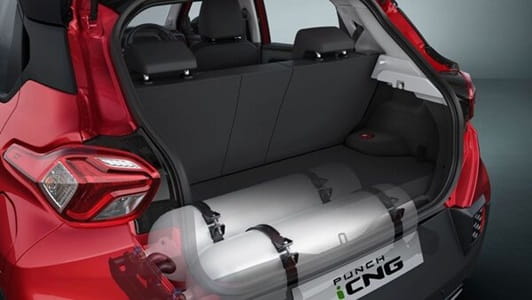
Dual cylinder technology has changed this conversation. Instead of using one big cylinder that occupies the boot, carmakers use two smaller cylinders placed more smartly, usually under the boot floor or in a lower packaging area. This helps free up usable luggage space while keeping the fuel-saving benefit of CNG. That is why dual-cylinder CNG cars are becoming popular in India.
What Is Dual Cylinder Technology in CNG Cars?
Dual cylinder technology means the car uses two smaller CNG cylinders instead of one large cylinder. These cylinders are packaged in a way that saves more usable boot space.
In traditional CNG cars, one big cylinder sits inside the boot and takes up a large portion of the luggage area. In dual-cylinder CNG cars, the two cylinders are arranged lower and flatter, making the boot more practical.
The total CNG capacity may remain similar to a normal setup, but the space management becomes much better. This is the main reason buyers are noticing this technology.
Why Traditional CNG Cars Had Boot Space Problems
A CNG cylinder is strong, heavy and bulky because it stores gas under high pressure. In older factory-fitted and aftermarket CNG cars, the cylinder was usually placed across the boot. This created three issues.
First, luggage space reduced sharply. Second, the boot shape became awkward, so even if some space remained, large bags were difficult to fit. Third, the spare wheel placement became inconvenient in some cars.
For city taxi users, boot space may not matter much every day. But for private family buyers, it matters a lot. A car should handle daily use and occasional travel. This is where traditional CNG cars often felt compromised.
How Dual Cylinders Improve Practicality
Dual cylinders improve practicality by changing the packaging. Two smaller tanks can be fitted lower and more efficiently than one big tank. This helps create a flatter and more usable boot area.
The boot may still be smaller than the petrol-only version, but it becomes far more useful than old-style CNG boots. You can keep shopping bags, office bags, school bags, small suitcases and daily items more comfortably.
This makes CNG attractive to private car buyers who earlier rejected it because of poor luggage space.
Why Indian Buyers Love the Idea
Indian car buyers are extremely value-conscious. They want fuel savings, but they also want comfort, features, space and family usability. Dual-cylinder technology fits this mindset well.
A buyer can enjoy CNG running cost without feeling that the car has become impractical. For many families, this removes the biggest emotional barrier.
Earlier, the decision was: save fuel or keep boot space. Now, with dual-cylinder CNG, the decision feels easier: save fuel and still get usable space.
Rising Fuel Prices Make CNG More Attractive
Petrol prices have made daily driving expensive. For people who drive 40–80 km daily, monthly petrol bills can become heavy. CNG offers a lower running cost, especially in cities with good CNG availability.
This is why CNG cars are popular among office commuters, small business owners, sales professionals, cab drivers and families with high monthly running.
Dual-cylinder technology makes this option more appealing because buyers no longer feel they are sacrificing too much practicality for fuel savings.
Factory-Fitted CNG Has Improved Buyer Confidence
Earlier, many people fitted CNG kits from outside after buying a petrol car. While some installations worked well, many buyers worried about safety, warranty, tuning and quality.
Factory-fitted CNG has improved confidence. These cars are designed, tested and calibrated by the manufacturer. The fuel system, wiring, ECU, suspension tuning and safety features are better integrated than random aftermarket kits.
Dual-cylinder technology is usually part of this factory-fitted evolution. It shows that companies are not treating CNG as a basic add-on anymore. They are designing CNG cars with family buyers in mind.
Better Boot Space Means Better Family Use
For Indian families, boot space is not a luxury. It is needed for grocery bags, school projects, wedding clothes, stroller, luggage, sports kit, office samples, medical equipment and festival shopping.
A CNG car with a nearly unusable boot becomes difficult for weekend travel. But a dual-cylinder CNG car can handle more real-life needs.
This is why private buyers are taking CNG more seriously. The car can be economical for weekdays and still useful for family outings.
Spare Wheel Packaging Has Become Smarter
One concern in CNG cars is spare wheel placement. In older layouts, the CNG cylinder occupied the boot area, and the spare wheel often had to be moved or placed awkwardly.
With newer dual-cylinder designs, carmakers are also working on smarter spare wheel placement. Some cars place the spare wheel underneath the body or in a more accessible arrangement.
This matters because Indian roads can be unpredictable. Punctures, rough roads and highway emergencies are common. A buyer wants CNG savings, but not at the cost of basic practicality.
Safety Is a Major Reason for Popularity
CNG safety depends on proper cylinder quality, leak detection, fuel lines, valves, installation and testing. Factory-fitted dual-cylinder systems are engineered with safety standards in mind.
Many modern CNG cars come with safety features such as leak detection, automatic fuel cut-off, thermal incident protection, proper mounting and better integration with the vehicle system.
This gives buyers more confidence than poorly fitted aftermarket kits. A safe and practical CNG car is much easier to trust.
Better Weight Distribution
A single large cylinder placed high or deep in the boot can affect weight distribution. Dual-cylinder packaging can help distribute weight more evenly and lower in the vehicle, depending on the design.
This may support better balance and reduce the feeling of a heavy boot. It can also help manufacturers tune the suspension more effectively for the CNG variant.
For normal users, the benefit may not feel dramatic, but the car can feel more thoughtfully engineered.
CNG Cars Are Becoming More Feature-Rich
Earlier, CNG variants were often offered only in lower or basic trims. Buyers had to choose between economy and features. Many CNG cars missed premium features that petrol variants offered.
Now, carmakers are offering CNG in better-equipped variants with touchscreens, connected features, automatic options in some models, safety features and improved interiors.
Dual-cylinder technology is part of this premium shift. It helps remove the old image that CNG cars are only for taxi use or basic commuting.
Dual Cylinder CNG and Automatic Transmission
Another reason CNG cars are gaining popularity is the arrival of more convenient transmission options in some models. Earlier, CNG mostly meant manual gearbox only. For city traffic, this was tiring.
As manufacturers improve CNG packaging and technology, buyers are also seeing more practical combinations. A CNG car with usable boot space and easier driving convenience becomes much more attractive for urban users.
This is especially useful in heavy traffic cities where fuel savings and comfort both matter.
Does Dual Cylinder Technology Increase Mileage?
Dual-cylinder technology itself does not directly increase mileage. Mileage depends on engine tuning, vehicle weight, driving style, traffic, tyre pressure, AC use and CNG quality.
The main benefit of dual cylinders is packaging and practicality, not extra fuel efficiency. However, because it makes CNG cars easier to live with, buyers are more willing to choose them and enjoy lower running costs.
So, the technology does not magically make the car more fuel-efficient, but it makes fuel-efficient CNG ownership more usable.
Is There Any Disadvantage?
Dual-cylinder CNG cars are practical, but they are not perfect. They may cost more than petrol variants. Boot space is improved, but usually still less than a petrol-only version. CNG availability may be limited in some towns and highways. Performance in CNG mode may feel slightly lower than petrol mode.
Also, servicing should be done at authorised or trusted workshops. CNG systems need proper inspection, and cylinders have testing requirements over time.
So, buyers should choose CNG only if their usage and city infrastructure support it.
Who Should Buy a Dual Cylinder CNG Car?
A dual-cylinder CNG car is ideal for people with high monthly running, regular city commutes, good CNG pump availability and family-space needs. It suits office commuters, small business owners, urban families and taxi users who want lower fuel cost without giving up too much boot space.
If you drive very little every month, the higher purchase cost may take longer to recover. If your city has poor CNG availability, petrol, hybrid or EV options may be more practical.
Dual Cylinder vs Single Cylinder CNG: Which Is Better?
For most private buyers, dual-cylinder CNG is better because it gives more usable boot space and better packaging. Single-cylinder CNG can still work for buyers who do not care much about luggage space or use the car mainly for short city trips.
But for family use, dual cylinder is clearly more practical. It solves the biggest complaint people had about CNG cars.
Why This Technology Will Grow Further
As petrol prices remain a concern and EV charging infrastructure still grows slowly in many areas, CNG will continue to attract Indian buyers. Dual-cylinder technology makes CNG cars more acceptable to families, not just commercial users.
More carmakers are likely to improve CNG packaging, offer better variants and add more convenience features. This will make CNG a stronger middle path between petrol affordability issues and EV charging concerns.
Practical Buying Tips
Before buying a dual-cylinder CNG car, check real boot space, CNG tank capacity, claimed mileage, service network, CNG pump availability near your route, safety features, warranty and variant features.
Take a test drive in both petrol and CNG modes if possible. Check whether the boot can fit your regular luggage. Ask where the spare wheel is placed. Also compare the price difference with your expected monthly savings.
A good CNG car should save money without creating daily inconvenience.
FAQs
Q1. What is dual cylinder technology in CNG cars?
Dual cylinder technology uses two smaller CNG cylinders instead of one large cylinder. This helps improve boot space and makes CNG cars more practical for family use.
Q2. Does dual cylinder CNG give better mileage?
No, dual-cylinder technology mainly improves packaging and boot space. Mileage depends on engine tuning, driving style, traffic, tyre pressure, AC use and CNG quality.
Q3. Is dual cylinder CNG safer than aftermarket CNG?
Factory-fitted dual-cylinder CNG systems are generally safer and better integrated than random aftermarket kits because they are designed, tested and installed by the car manufacturer.
Q4. Should I buy a dual-cylinder CNG car?
You should consider one if you drive regularly, have good CNG availability nearby and want lower running costs without losing too much boot space. If your monthly running is low, the extra cost may take longer to recover.