 By Ketan Kumar
 Grandma’s kitchen wisdom insists that a small piece of gur after dinner is somehow “healthier” than that spoon of sugar in your chai. Ayurvedic tradition backs her up. Instagram wellness pages practically worship jaggery as a superfood. Yet your doctor, if you have diabetes or are watching your weight, probably gave you a much more cautious look the last time you mentioned switching to jaggery. So who’s actually right here?
This isn’t just a trivial kitchen debate. With diabetes and metabolic syndrome affecting an enormous and growing share of Indian adults, and sugar substitution being one of the most common dietary changes people attempt, understanding what jaggery actually delivers, beyond the traditional halo it carries, genuinely matters. The honest answer sits somewhere between “jaggery is a miracle sweetener” and “it’s exactly the same as sugar,” and getting the nuance right can change how you actually use it in your daily diet.
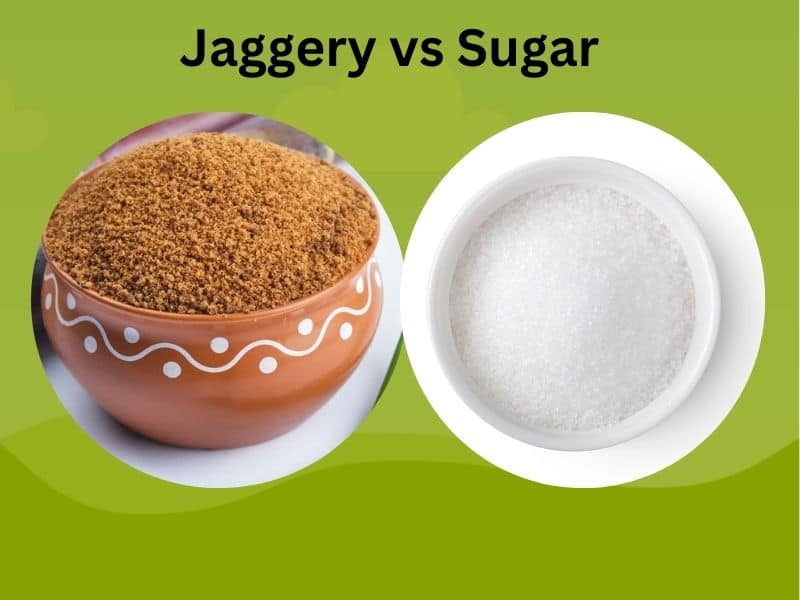
Starting With the Calorie Comparison, Because It Genuinely Surprises People
Let’s address the number everyone assumes will show a dramatic difference, because it genuinely doesn’t. Jaggery contains approximately 383 calories per 100 grams, while white sugar contains around 387 calories for the same amount. That’s a difference of roughly four calories, which is essentially negligible in any real dietary sense.
If you’re switching to jaggery specifically hoping to cut calories, this alone won’t move the needle. Both sweeteners are overwhelmingly composed of sugar, sucrose in particular, and your body processes those calories in a remarkably similar way regardless of which sweetener delivered them.
Where Jaggery Genuinely Pulls Ahead: The Mineral Content
This is where the comparison actually becomes interesting, and where jaggery’s reputation has some genuine substance behind it. Unlike white sugar, which undergoes extensive refining that strips away virtually everything except pure sucrose, jaggery retains trace amounts of minerals naturally present in sugarcane or palm sap.
Per 100 grams, jaggery typically contains around 11 mg of iron, roughly 70-90 mg of magnesium, close to 1,000 mg of potassium, and smaller amounts of calcium and manganese. White sugar, by comparison, contains essentially none of these, earning it the accurate description of “empty calories,” sweetness with nothing else attached.
But Here’s the Catch Nobody Mentions Enough
This mineral advantage sounds impressive until you consider realistic portion sizes. Those figures are based on a full 100-gram serving, an amount nobody actually consumes of a sweetener in one sitting. A typical serving of jaggery, a small cube or a teaspoon in your chai, works out to somewhere between 5 and 20 grams.
At that quantity, the mineral contribution becomes genuinely modest. A 20-gram piece of jaggery gives you roughly 2.2 mg of iron, useful, but hardly a substitute for actually eating iron-rich foods like leafy greens, lentils, or meat if you’re managing anaemia. The honest takeaway here is that jaggery offers a small, real nutritional bonus over sugar, but it’s not substantial enough to treat jaggery as a mineral supplement or a genuine health food in its own right.
The Glycemic Index Surprise That Contradicts Popular Belief
This is genuinely worth paying close attention to, because it challenges one of the most widely repeated claims about jaggery. Popular wisdom insists jaggery has a lower glycemic index than white sugar, meaning it raises blood sugar more slowly and gently. According to Indian nutrition research data, this isn’t quite accurate for regular sugarcane jaggery.
White sugar carries a glycemic index of around 65, considered medium. Sugarcane jaggery, the most commonly available type across Indian kitchens, actually carries a higher glycemic index, somewhere around 84 to 86, which is genuinely higher than white sugar, not lower. This means regular sugarcane jaggery can raise your blood glucose faster than plain sugar does, directly contradicting the common assumption. Palm jaggery and date jaggery, less commonly used varieties, do carry meaningfully lower glycemic indices, around 40 to 55, making them the better choice specifically if glycemic response is your primary concern.
What This Actually Means If You Have Diabetes
Given this glycemic index data, the guidance here is genuinely important to get right. If you’re diabetic and have been substituting jaggery for sugar believing it’s a gentler option for your blood sugar, that assumption doesn’t hold up for regular sugarcane jaggery specifically. It should generally be treated with the same caution as white sugar, rather than as a diabetes-friendly alternative.
If you specifically want a lower-glycemic natural sweetener, palm jaggery or date-based sweeteners are genuinely better choices than either sugarcane jaggery or white sugar. That said, this is exactly the kind of dietary decision worth discussing directly with your doctor or a registered dietitian, since individual blood sugar responses can vary, and overall dietary pattern matters more than any single sweetener swap.
Digestive Claims and What Genuinely Holds Up
Many Indian households follow the tradition of eating a small piece of jaggery after meals, believing it aids digestion. This practice does have some basis, jaggery can stimulate digestive enzyme activity to a degree, and its trace mineral content offers a mild functional benefit compared to pure sugar.
That said, it’s worth being honest that scientific evidence directly supporting strong digestive benefits from jaggery remains limited, and adding roughly 60-80 calories of concentrated sugar after a meal isn’t inherently a health optimisation, regardless of the traditional practice behind it. If digestive support is genuinely your goal, fibre-rich foods and adequate hydration offer far more reliably documented benefits than a post-meal piece of jaggery.
The Broader Health Claims Worth Questioning
Jaggery has picked up a reputation for everything from “purifying blood” to “detoxifying the liver,” claims that circulate widely but genuinely lack solid scientific backing. Your liver and kidneys handle detoxification on their own regardless of dietary sweetener choice, and no food, jaggery included, performs a genuine “blood purification” function in any medically recognised sense.
This doesn’t mean jaggery has zero value beyond taste, its iron content genuinely can offer modest support for people managing mild iron deficiency, though it shouldn’t replace proper dietary iron sources or medical treatment for diagnosed anaemia. Being clear-eyed about which claims hold up and which are largely marketing language helps you use jaggery sensibly rather than as a cure-all.
So Which One Should You Actually Choose
Based on the genuine evidence, jaggery offers a marginal nutritional edge over white sugar thanks to its retained minerals, but it’s still fundamentally a concentrated sugar source, not a health food. The Indian Council of Medical Research’s dietary guidelines recommend limiting all free sugars, including jaggery, to around 20-25 grams daily for healthy adults, treating jaggery as sugar rather than a genuinely different category.
If you enjoy jaggery’s traditional flavour and want the modest mineral bonus it offers over refined sugar, using it mindfully in small quantities is a reasonable choice. But if you’re hoping switching sweeteners alone will meaningfully improve your blood sugar control or support weight loss, the honest answer is that reducing your total sweetener intake, regardless of which one you choose, matters considerably more than which specific sugar sits in your kitchen jar.
Frequently Asked Questions
Q1. Is jaggery genuinely safe for diabetics to use instead of sugar?
Not necessarily, since regular sugarcane jaggery actually has a higher glycemic index than white sugar, meaning it can raise blood glucose even faster. Diabetics should generally treat jaggery with the same caution as sugar, and consult their doctor before making any substitution based on assumed health benefits.
Q2. Does jaggery genuinely help with weight loss compared to white sugar?
No, there’s no meaningful evidence supporting this claim. Jaggery contains nearly identical calories to white sugar, and its mineral content doesn’t offset its high sugar load. Weight management depends on reducing overall sweetener intake, not simply switching from one concentrated sugar source to another.
Q3. How much jaggery can I safely consume daily if I want the mineral benefits without overdoing the sugar?
Sticking to roughly one to two teaspoons daily, within the broader recommended limit for total added sugars, allows you to get a modest mineral contribution without significantly impacting your overall sugar intake or blood glucose levels.
Q4. Is palm jaggery a better choice than regular sugarcane jaggery?
Yes, if glycemic response is your specific concern. Palm jaggery has a notably lower glycemic index than both sugarcane jaggery and white sugar, making it a genuinely better option for anyone trying to manage blood sugar more carefully while still using a natural sweetener.
 Saurav Mehra