 By Saurav Mehra
 Every monsoon, Indian roads can change within minutes. A normal office route suddenly becomes a mini-river. Underpasses fill up, potholes disappear under muddy water, traffic slows to a crawl, two-wheelers get stuck, and car owners sit inside wondering the same scary question: “Should I cross this waterlogged road or turn back?”
This is not a small decision. Driving through deep water can damage your engine, brakes, electronics, clutch, exhaust, sensors and interiors. In some cases, it can also become life-threatening if the water is moving fast or the road surface below has collapsed. Many expensive car repairs during monsoon happen not because of rain itself, but because drivers enter water without judging depth, speed or risk.
The safest rule is simple: avoid deep waterlogged roads whenever possible. But in real Indian driving, you may sometimes face unavoidable waterlogging—near underpasses, colony roads, market lanes, office exits, toll roads or flooded parking areas. In such situations, knowing the correct technique can reduce risk. The aim is not to become overconfident; the aim is to make a safe decision before your car enters trouble.
First Rule: Do Not Enter If You Are Unsure
The most important driving skill in waterlogging is not clutch control or steering—it is judgement. If you cannot clearly see the road, do not know the depth, or water is flowing strongly, avoid entering.
Water can hide open manholes, broken road edges, stones, potholes, dividers, stalled vehicles and electric hazards. A road that looked normal yesterday may be damaged after heavy rain.
If other cars are stuck inside, if water is above the wheel centre, if the flow is strong, or if the road goes downhill into an underpass, turn back. A longer route is cheaper than engine repair.
Check the Water Depth Before Driving
Never judge water depth only by looking from inside the car. Watch other vehicles carefully. If small cars are struggling, do not assume your car will pass easily. SUVs may handle slightly more water because of higher ground clearance, but even SUVs can fail if water enters the air intake or electronics.
A practical way is to compare the water level with tyres, footpaths or road dividers. If water is touching the lower door area or rising near the bumper, it is risky. If water depth is unknown, avoid it.
Remember, modern cars have many sensors and electronic parts placed low. Even if the engine survives, water can still damage wiring, brakes and interiors.
Understand Hydrolock: The Biggest Engine Risk
Hydrolock happens when water enters the engine through the air intake. An engine is designed to compress air and fuel, not water. If water enters the cylinders, the engine can suffer severe damage.
This is one of the most expensive monsoon car problems. It can bend engine parts and may require major repair or replacement.
The biggest mistake drivers make is restarting a stalled car in water. If the engine stops inside water, do not try to start it again. Switch off the ignition, stay calm and call roadside assistance or a towing service.
Avoid Fast Driving Through Water
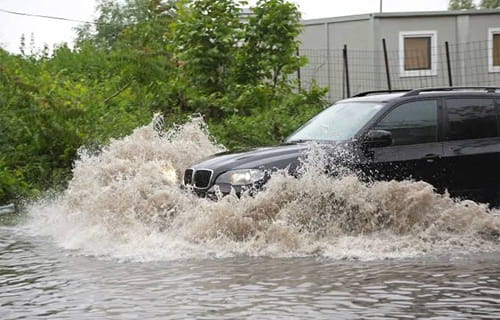
Some drivers think speeding through water will help them cross quickly. This is dangerous. Fast driving creates a large wave that can enter the engine bay, damage the bumper, splash into air intake areas and disturb nearby vehicles.
Drive slowly and steadily. The goal is to create a small controlled wave in front of the car, not a dramatic splash. Speed also hides potholes and reduces control.
Fast movement through water may look impressive for a few seconds, but it can destroy the car.
Use Low Gear and Maintain Steady Movement
If the water is shallow enough and you have decided it is safe to cross, use low gear. In a manual car, first gear is usually best. Keep steady throttle and avoid unnecessary gear changes inside water.
In an automatic car, use manual mode, low mode or drive gently at slow speed depending on your car. Avoid sudden acceleration. Do not stop in the middle unless absolutely necessary.
The idea is to keep the car moving at a controlled pace. Stopping inside water increases the chance of water entering the exhaust or engine area.
Keep Distance From the Vehicle Ahead
Do not follow another car too closely through waterlogged roads. If the vehicle ahead stops suddenly, you may also be forced to stop in water. If it creates a strong wave, that water may hit your car.
Maintain enough distance so you can react safely. Also watch larger vehicles like buses, trucks and SUVs. Their waves can push water toward smaller cars and increase risk.
If a heavy vehicle is coming from the opposite side, wait if possible. Let its wave settle before moving ahead.
Do Not Overtake in Waterlogged Areas
Overtaking inside water is a bad idea. You cannot see potholes, road edges or obstacles clearly. Sudden steering can make the car unstable. Also, overtaking creates splashes that may affect your own car and other road users.
Stay in one lane, move slowly and avoid unnecessary steering movements. If traffic is slow, accept the delay. Monsoon driving needs patience.
Turn Off Auto Start-Stop Feature
Many modern cars have auto start-stop technology that switches off the engine when the car stops and restarts it when you move. In waterlogged conditions, this can be risky.
If the engine switches off while surrounded by water, restarting may create problems if water has entered sensitive areas. Before entering water, turn off the auto start-stop feature if your car has it.
This small step can help avoid unnecessary engine restart risk in flooded conditions.
Keep AC Settings Practical
Some drivers switch off the AC in water, while others keep it on. The main concern is reducing engine load and preventing fogging. During heavy rain, windows can fog quickly, so your defogger may be needed.
Use the defogger if visibility drops. Keep the cabin clear and avoid wiping the windshield from inside while driving. Good visibility is more important than comfort.
If the car is struggling, reduce unnecessary load, but do not compromise on visibility.
Be Extra Careful With EVs and Hybrids
Electric and hybrid cars have sealed battery systems, but that does not mean they should be driven through deep water carelessly. Water can still affect connectors, sensors, brakes, cabin areas and low-mounted components.
Follow the manufacturer’s water-wading guidance for your vehicle. If you drive an EV or hybrid, avoid flooded roads more strictly. Do not assume that because there is no traditional engine intake like a petrol car, deep water is safe.
If an EV or hybrid has been exposed to deep water, get it inspected by an authorised service centre.
What to Do If the Car Stalls in Water
If your car stalls while crossing water, do not restart it. This is the golden rule.
Switch off the ignition. Turn on hazard lights if possible. If water is rising and staying inside the car is unsafe, move out carefully only when it is safe to do so. Avoid stepping into fast-moving water or areas where electric wires may be submerged.
Call roadside assistance, towing service or emergency help. Inform your insurance provider if water damage is suspected. Restarting the car may increase damage and can also create insurance complications.
After Crossing Water: Dry the Brakes
Once you come out of water, do not immediately drive fast. Brakes may feel weak because water reduces braking efficiency.
Drive slowly and gently press the brake pedal a few times to dry the brake pads and discs. Make sure the brakes respond normally before increasing speed.
Also listen for unusual sounds from the wheels, engine bay or exhaust. If the car feels rough, shakes, smells strange or shows warning lights, stop in a safe place and get help.
Check the Cabin and Floor Mats
After driving through water, check whether water entered the cabin. Wet floor mats, damp carpets and moisture under seats can lead to bad smell, fungus, rust and electrical problems.
Remove floor mats and dry them properly. If the carpet is soaked, do not ignore it. Get the interior cleaned and dried professionally. Modern cars have wiring under seats and carpets, so water inside the cabin is not just a smell issue.
Inspect Tyres, Brakes and Underbody
Waterlogged roads often hide potholes and debris. After crossing, check tyres for cuts, sidewall damage or low pressure. If you hit a pothole hard, check wheel alignment and suspension.
Brakes should be inspected if they make grinding sounds, feel weak or vibrate. Mud and dirty water can affect brake parts.
If you crossed deep muddy water, underbody cleaning may be useful. Mud stuck under the car can cause corrosion and smell later.
Do Not Park in Flood-Prone Spots
Prevention starts before driving. During monsoon, avoid parking in basement areas, low-lying roads, underpasses, open drains or places known for waterlogging.
If heavy rain is expected, move your car to higher ground early. Many cars get damaged while parked, not while driving. Water entering a parked car can damage interiors, electronics and engine components.
If your parking area floods often, discuss drainage or alternate parking before peak monsoon.
Prepare Your Car Before Monsoon
A car in good condition handles rainy roads better. Check tyres, brakes, wipers, battery, lights, horn, defogger and windshield washer before monsoon begins.
Tyres should have good tread depth because wet roads reduce grip. Wipers should clear water properly. Headlights and brake lights should work because visibility drops in rain.
Also keep emergency numbers, insurance details, roadside assistance contact, a torch, phone charger and basic rain gear in the car.
Insurance and Water Damage
Not all insurance policies cover every type of water damage in the same way. Engine protection cover is very important if you live in a flood-prone city or drive during monsoon.
Basic comprehensive insurance may not fully cover engine damage caused by water entering the engine, especially if the car was restarted after stalling. Add-ons like engine protect, zero depreciation and roadside assistance can be useful.
Before monsoon, check your policy instead of waiting until damage happens.
Common Mistakes to Avoid
Do not enter unknown deep water. Do not follow buses closely. Do not drive fast to create splashes. Do not restart a stalled car. Do not ignore brake weakness after crossing. Do not park in low-lying flooded areas. Do not assume SUVs are waterproof. Do not trust waterlogged underpasses blindly.
Most water-damage incidents happen because of overconfidence. A safe driver knows when to stop.
Practical Monsoon Driving Checklist
Before entering water, check depth, flow and road visibility. Choose another route if unsure. If crossing is unavoidable and water is shallow, drive slowly in low gear, maintain steady movement and keep distance. Avoid sudden braking, gear changes and overtaking. After crossing, dry brakes gently and check for warning signs.
Your car can be repaired, but personal safety comes first. No meeting, delivery, office attendance or shortcut is worth risking your life in floodwater.
FAQs
Q1. Is it safe to drive through waterlogged roads?
It is safe only if the water is shallow, still, and you can clearly judge the road. If water is deep, fast-moving or unknown, avoid entering. Turning back is always safer than risking engine damage or getting stuck.
Q2. What should I do if my car stops in water?
Do not restart the engine. Switch off the ignition, turn on hazard lights if possible, and call roadside assistance or towing service. Restarting can cause severe engine damage if water has entered the engine.
Q3. Should I drive fast or slow through water?
Drive slowly and steadily. Fast driving creates waves that can push water into the engine bay and damage the car. Use low gear and avoid stopping or changing gears inside water.
Q4. Can SUVs drive safely through deep water?
SUVs usually have better ground clearance, but they are not waterproof. Deep water can still damage the engine, electronics, brakes and interiors. Always check the manufacturer’s water-wading limit and avoid unknown floodwater.