 By Saurav Mehra
 IBS can make everyday eating feel like a guessing game. One day dal feels fine, the next day it causes bloating. Tea may trigger cramps, milk may cause loose motions, spicy food may create burning, and sometimes even a simple roti-sabzi meal can leave the stomach heavy. For many Indians, this becomes more frustrating because our food is full of variety—dal, rajma, chole, wheat roti, rice, curd, pickles, onions, garlic, masalas, tea, street food and festival sweets. When digestion becomes sensitive, the same foods that once felt normal can suddenly feel risky.
Irritable Bowel Syndrome, commonly called IBS, is not just “gas” or “weak digestion.” It is a long-term gut sensitivity problem where the bowel reacts strongly to certain foods, stress, irregular meals, poor sleep or hormonal changes. Some people get constipation, some get loose motions, some get both, and many struggle with bloating, cramps and urgent toilet trips. The good news is that IBS can often be managed very well with the right Indian diet pattern, food tracking and lifestyle habits. The goal is not to stop eating everything; the goal is to understand your gut and build a routine that keeps symptoms under control.
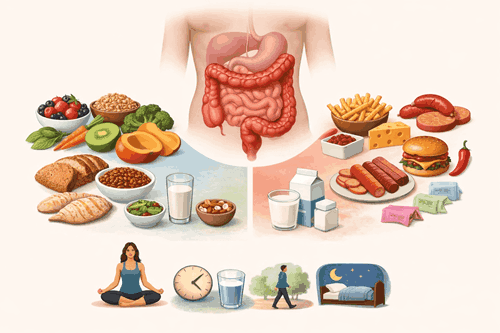
What Is IBS in Simple Words?
IBS is a functional bowel disorder. This means the gut may look normal in tests, but the way it works is disturbed. The nerves and muscles of the intestine become more sensitive. Food, stress, gas or movement inside the gut may create stronger symptoms than usual.
IBS usually causes abdominal pain or discomfort along with changes in bowel habits. Some people have IBS-C, where constipation is common. Some have IBS-D, where diarrhoea or loose motions are common. Some have IBS-M, where constipation and loose motions alternate.
IBS does not usually damage the intestine like some serious bowel diseases, but it can badly affect daily comfort, travel, office work, social life and mental peace.
Why IBS Feels Difficult in Indian Diets
Indian food is healthy in many ways, but it can also be heavy on common IBS triggers. Onion, garlic, wheat, dals, beans, milk, curd, spicy tadka, fried snacks and tea are used frequently. Many meals are also eaten quickly or at irregular times.
Another issue is portion size. A small bowl of dal may be tolerated, but a large bowl of rajma with rice may trigger bloating. A little spice may be fine, but oily chilli-heavy food may cause cramps.
IBS is personal. One person may tolerate curd but not milk. Another may tolerate rice but not wheat. That is why copying another person’s IBS diet can fail.
Start With a Food and Symptom Diary
Before removing many foods, keep a diary for two weeks. Write what you ate, meal timing, stress level, sleep quality and symptoms. Note bloating, pain, loose motion, constipation, acidity or urgency.
This diary helps identify patterns. Maybe symptoms come after milk tea, not all dairy. Maybe onion-garlic tadka is the trigger, not dal itself. Maybe weekend street food causes flare-ups, not regular home food.
A diary prevents unnecessary food fear. It helps you make targeted changes instead of avoiding half the kitchen.
Eat Regular Meals
Irregular eating is a major IBS trigger. Long gaps, skipping breakfast, eating a heavy dinner or eating late at night can disturb bowel movement.
Try to eat meals at similar times daily. Keep breakfast light but nourishing, lunch balanced and dinner early. Do not overload the stomach at night.
Eating slowly also matters. Many people swallow food quickly while watching TV or using mobile phones. This increases swallowed air and bloating. Sit calmly, chew properly and avoid rushing meals.
Manage Fibre According to Your IBS Type
Fibre is useful, but the type of fibre matters. In IBS, suddenly increasing rough fibre can worsen gas and bloating.
If constipation is your main issue, soluble fibre may help. Indian-friendly options include oats, peeled fruits, carrots, lauki, pumpkin, psyllium husk if advised, and soft cooked vegetables. Drink enough water, otherwise fibre can worsen constipation.
If loose motions are common, very high fibre, raw salads, excess sprouts and bran-heavy foods may irritate the gut. In such cases, soft cooked foods like rice, curd if tolerated, banana, khichdi and light dal may suit better.
Avoid adding too much fibre too fast. Increase slowly and observe your body.
Be Careful With Dal, Rajma and Chole
Pulses are important in Indian diets, but they can trigger gas in IBS because they ferment in the gut.
This does not mean you must stop all dals forever. Start with easier dals like moong dal or masoor dal in small portions. Soak dals well, discard soaking water, cook properly and use digestive spices like jeera, hing and ajwain if they suit you.
Rajma, chole, black chana and whole urad are heavier and may cause more bloating. Eat them occasionally in small quantities if tolerated. Avoid combining them with fried foods, excess onion, heavy masala and large rice portions.
Onion and Garlic May Be Major Triggers
Many Indian dishes begin with onion-garlic tadka, but these are common IBS triggers for some people. They contain fermentable carbohydrates that may cause gas and bloating.
If you suspect onion or garlic, try reducing them for two weeks and observe. Use alternatives like ginger, hing, jeera, curry leaves, coriander, mint, green chilli, turmeric, mustard seeds and whole spices.
For flavour, you can make no-onion no-garlic versions of dal, sabzi, poha, upma and khichdi. Indian food can still taste good without heavy onion-garlic base.
Milk, Curd and Lactose Sensitivity
Many IBS patients are sensitive to milk. Milk tea, cold milk, milkshakes and creamy sweets may trigger loose motions, cramps or bloating.
Curd may be better tolerated by some people because fermentation reduces lactose to some extent. But this is not true for everyone. Some people tolerate homemade curd well, while others get symptoms even from curd.
Try observing dairy separately. Do not remove all dairy permanently without need. If milk triggers symptoms, try lactose-free milk or discuss alternatives with a dietitian. If curd suits you, it can be useful in small portions.
Spicy and Fried Foods Can Worsen Flare-Ups
Spices are not automatically bad, but very spicy and oily food can irritate IBS symptoms. Chilli-heavy curries, fried snacks, pickles, street chaat, samosa, pakora, kachori, schezwan foods and oily restaurant gravies can cause cramps, urgency or acidity.
During flare-ups, keep food simple: soft rice, moong dal khichdi, curd if tolerated, boiled potatoes, light sabzi, banana, soups and warm water. Once symptoms settle, slowly return to normal foods.
For daily cooking, use moderate spices and less oil. Avoid reheated oil and very heavy tadkas.
Rice, Roti and Wheat: What Works Better?
Many people with IBS feel better with rice than wheat, especially during flare-ups. Rice is usually easier to digest and less gas-forming for many people.
Wheat roti can trigger bloating in some IBS patients, especially if eaten in large quantity or with heavy dal. This does not mean everyone with IBS must go gluten-free. But if wheat repeatedly causes symptoms, discuss a structured trial with a doctor or dietitian.
Do not stop gluten before testing if your doctor suspects celiac disease, because it may affect test results. For many people, reducing quantity and improving meal balance is enough.
Low-FODMAP Diet: Useful but Should Be Guided
A low-FODMAP diet is often helpful for IBS. It reduces certain fermentable carbohydrates that can trigger gas, bloating, pain and bowel changes. Foods like onion, garlic, wheat, milk, some fruits, some dals and certain sweeteners may be restricted temporarily.
But this diet is not meant to be followed blindly forever. It has three steps: short-term restriction, gradual reintroduction and personalisation. The goal is to find your triggers, not to fear food permanently.
Because Indian diets are complex, it is best to do a low-FODMAP plan with a trained dietitian. Otherwise, you may unnecessarily remove nutritious foods and create deficiencies.
Hydration Matters
Water intake affects IBS strongly. Low water can worsen constipation. Too much tea or coffee can irritate the gut or increase urgency.
Drink plain water through the day. If loose motions are frequent, maintain fluids carefully. Coconut water, ORS when needed, thin rice kanji, plain chaas if tolerated and light soups can help during mild episodes.
Avoid carbonated drinks because they can increase gas. Also avoid drinking very cold beverages quickly if they trigger cramps.
Probiotics and Fermented Foods
Some people with IBS benefit from probiotics, but results vary. Curd, buttermilk and fermented foods may help some Indian patients, while others may feel bloated.
If trying probiotics, use one product consistently for a few weeks and observe symptoms. Do not keep changing brands every few days. If symptoms worsen, stop and discuss with a doctor.
Fermented foods like idli, dosa, dhokla and curd can be part of the diet if tolerated. But very sour, spicy or oily fermented foods may not suit everyone.
Stress and IBS Are Closely Connected
IBS is strongly linked with the gut-brain connection. Stress, anxiety, poor sleep, exams, office pressure, family tension and travel can trigger symptoms even when food is simple.
This does not mean IBS is “only in the mind.” It means the gut and brain communicate closely. When stress rises, gut sensitivity and movement can change.
Daily walking, breathing exercises, yoga, meditation, prayer, journaling and better sleep can reduce flare-ups. Even 10 minutes of calm breathing after meals may help some people.
Exercise Helps Bowel Movement
Regular movement supports digestion and reduces stress. Walking is one of the best exercises for IBS. A short walk after meals can help gas move and reduce heaviness.
For constipation-type IBS, daily walking, yoga stretches and gentle core movement may help bowel regularity. Avoid very intense workouts during flare-ups if they worsen cramps.
The aim is steady movement, not punishment exercise.
What to Eat During an IBS Flare-Up
During a flare-up, keep food simple and low-irritation. Choose soft rice, plain khichdi, moong dal, boiled potato, banana, curd if tolerated, toast if tolerated, light vegetable soup, lauki sabzi, carrot, pumpkin and warm water.
Avoid fried food, heavy spices, raw salad, rajma, chole, milk, cold drinks, alcohol, sweets and street food until symptoms settle.
Once better, reintroduce foods slowly. Do not jump back to a heavy meal immediately.
When to See a Doctor
IBS should be diagnosed properly. Do not assume every stomach problem is IBS. See a doctor if symptoms are new, severe or worsening.
Warning signs include blood in stool, unexplained weight loss, fever, night-time diarrhoea, persistent vomiting, anaemia, severe abdominal pain, family history of bowel cancer or symptoms starting after age 45–50.
These signs need medical evaluation. IBS is manageable, but serious conditions must be ruled out.
Practical Indian IBS Routine
Eat on time. Keep meals moderate. Identify triggers through a diary. Use moong dal more often than heavy dals. Try rice or soft khichdi during flare-ups. Reduce onion, garlic, excess chilli and fried snacks if they trigger symptoms. Drink enough water. Walk daily. Sleep well. Manage stress. Take medical help when symptoms are frequent or alarming.
IBS management is not about a perfect diet. It is about learning your gut’s limits and creating a routine that keeps life comfortable.
FAQs
Q1. Is curd good for IBS?
Curd helps some people with IBS, especially if they tolerate dairy well. But others may get bloating or loose motions from curd. Start with a small quantity of fresh homemade curd and observe your symptoms.
Q2. Which dal is best for IBS?
Moong dal is usually lighter and better tolerated than rajma, chole or whole urad. Soak it well, cook it soft and use mild spices. Portion size matters because even healthy dal can cause gas if eaten in excess.
Q3. Should IBS patients avoid wheat roti?
Not everyone needs to avoid wheat roti. Some people tolerate it well, while others feel bloated. If wheat seems to trigger symptoms, discuss a proper trial with a doctor or dietitian, especially before going gluten-free.
Q4. Can IBS be cured permanently?
IBS is usually a long-term sensitive gut condition, but symptoms can be controlled very well with diet changes, stress management, regular meals, sleep and medical support when needed. Many people live comfortably once they identify their triggers.