 By Saurav Mehra
 Buying a TV in India is no longer as simple as choosing “32-inch or 55-inch.” Today, when you visit a showroom or open Amazon, Flipkart, Croma or Reliance Digital, you see terms like OLED, QLED, LED, Mini LED, 4K, HDR, Dolby Vision, refresh rate and smart TV OS. Salespeople often make every model sound perfect, and online listings make even basic TVs look premium. For a normal buyer, the confusion is real: should you spend more on OLED, choose a bright QLED, or save money with a regular LED TV?
This decision matters because a TV is not a one-year purchase. In Indian homes, the TV is used by the whole family—for cricket, daily serials, YouTube, OTT movies, kids’ cartoons, news, gaming, religious content, music and sometimes even as a large screen for work or study. Also, Indian rooms are different. Some homes have bright living rooms with sunlight, some have smaller bedrooms, some watch TV mostly at night, and some keep news channels running for hours.
The best TV is not the most expensive one. The best TV is the one that fits your room, viewing habit, budget and long-term use. OLED, QLED and LED all have strengths. Let’s understand them in simple language.
What Is LED TV?
Most affordable and mid-range TVs sold in India are LED TVs. Technically, these are LCD TVs with LED backlighting. The screen uses a backlight to create brightness, and the LCD panel controls the picture.
LED TVs are popular because they are budget-friendly, widely available and suitable for everyday family viewing. You can find LED TVs in almost every size, from small bedroom TVs to large living-room models.
For basic use like DTH channels, YouTube, news, serials and casual OTT watching, a good LED TV can be enough. But picture quality depends heavily on panel type, brightness, processor and brand. A cheap LED TV may look dull, while a good LED TV can look quite impressive.
What Is QLED TV?
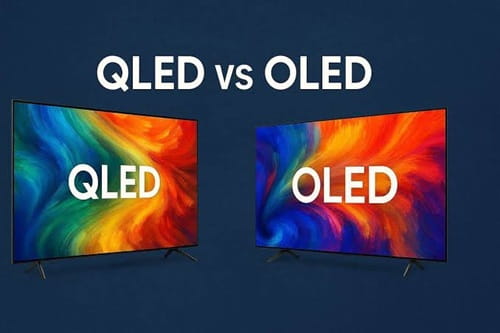
QLED is an advanced form of LED TV. It uses quantum dot technology to improve colours and brightness. In simple words, QLED TVs are designed to produce richer colours and brighter images than regular LED TVs.
QLED TVs are especially useful for bright Indian living rooms where sunlight or tube lights affect screen visibility. They are good for cricket, sports, news, colourful movies, gaming and family viewing.
However, QLED still uses backlighting. This means it usually cannot create the same perfect black levels as OLED. In dark scenes, some greyish glow or blooming may appear, especially in lower-end QLED models. Higher-end QLED or Mini LED QLED TVs handle this much better.
What Is OLED TV?
OLED is different from LED and QLED. In an OLED TV, each pixel produces its own light. When a pixel needs to show black, it can switch off completely. This creates deep blacks, excellent contrast and a premium cinema-like picture.
OLED TVs are loved by movie lovers because dark scenes look rich and natural. If you watch Netflix, Prime Video, Disney+ Hotstar, SonyLIV or Blu-ray-quality content in a darker room, OLED can feel stunning.
OLED also offers excellent viewing angles. This is useful when the whole family sits around the room and watches from different sides.
But OLED TVs are usually more expensive and may not be the best choice for very bright rooms or for people who keep static content like news channels running for many hours daily.
Picture Quality: Which Looks Best?
For pure picture quality, OLED usually gives the most premium experience. Blacks look truly black, colours feel natural, and contrast is excellent. Movie scenes, night shots, space visuals and cinematic content look beautiful on OLED.
QLED TVs offer punchy colours and strong brightness. They may not match OLED’s black levels, but they can look more vibrant in bright rooms. For many Indian homes, a good QLED can look more practical than OLED during daytime viewing.
LED TVs vary widely. A basic LED TV may look average, but a good 4K LED TV from a reliable brand can still provide enjoyable picture quality for regular use.
If you are a serious movie lover, OLED wins. If you want a bright, colourful family TV, QLED is very strong. If you want value for money, LED makes sense.
Brightness and Indian Rooms
Brightness is a big factor in India. Many living rooms have windows, balcony light, white walls and tube lights. In such rooms, low-brightness TVs can look dull.
QLED and Mini LED TVs are generally better for bright rooms because they can get very bright. Sports, news and daytime serials look clear even with lights on.
OLED TVs have improved a lot, but they still perform best when room lighting is controlled. If you watch mostly at night or can dim the lights, OLED gives an excellent experience. If your TV faces a bright window, QLED may be the safer choice.
Regular LED TVs can be fine for bedrooms or moderate lighting, but very cheap models may struggle in bright rooms.
Black Levels and Contrast
Black level means how dark the screen can become in dark scenes. This affects movie quality a lot.
OLED is the winner here because pixels can turn off completely. This gives perfect black and strong contrast.
QLED and LED TVs use backlights, so blacks may appear dark grey instead of pure black. Mini LED models improve this through better local dimming, but they still may show some blooming around bright objects in dark scenes.
If you love movies, web series and cinematic content, OLED gives the most impressive dark-room experience.
Burn-In Risk: Should You Worry?
Burn-in means a static image can leave a permanent mark on the screen. This can happen if the same logo, ticker, scoreboard or game interface stays on screen for very long periods repeatedly.
OLED TVs have improved protection features, but burn-in risk still exists in certain usage patterns. If your family watches news channels with fixed logos and tickers for 6–8 hours daily, OLED may not be the safest choice.
QLED and LED TVs are much safer for static content. They are better for shops, offices, news-heavy homes, gaming with static HUDs and users who do not want to worry about screen care.
For normal mixed usage, OLED can be fine. But for careless all-day static viewing, QLED or LED is more practical.
Sports and Cricket Viewing
For Indian buyers, cricket is a serious TV test. A good sports TV needs brightness, motion handling and clear viewing from different angles.
QLED TVs are excellent for cricket because they are bright and colourful. Day matches, green fields and stadium lights look lively. Mini LED QLED models can be even better.
OLED TVs also handle sports beautifully with smooth motion and great contrast, but they may not be ideal if you watch sports channels with static scoreboards for very long hours every day.
LED TVs are fine for casual cricket viewing, but choose a model with good motion handling and decent refresh rate if sports are important to you.
Gaming Performance
Gamers should look beyond OLED, QLED and LED labels. Important features include low input lag, HDMI 2.1, 120Hz refresh rate, VRR, ALLM and good HDR performance.
OLED TVs are excellent for gaming because of fast response time, deep contrast and smooth visuals. Games look cinematic and sharp.
QLED and Mini LED TVs are also great for gaming, especially in bright rooms and for long gaming sessions where burn-in worry is lower.
Regular LED TVs can work for casual console gaming, but serious gamers should check refresh rate and gaming features carefully.
OTT and Movie Watching
If you mainly watch OTT movies and web series at night, OLED is the most premium choice. Dark scenes, skin tones, contrast and cinematic depth look excellent.
QLED is better if you watch a lot of colourful content, sports, reality shows and YouTube in a bright room. It gives a lively, punchy picture that many families enjoy.
LED is good for budget OTT viewing. Just make sure you choose a 4K TV if buying 43-inch or larger, because Full HD may not look sharp on bigger screens.
Viewing Angle
Viewing angle matters when people sit on the side of the TV. OLED usually has excellent viewing angles, so the picture looks good even from the side.
Many LED and QLED TVs can lose colour and contrast when viewed from an angle, especially VA-panel models. Some premium models handle this better.
If your family sits spread across the room, OLED may feel better. If everyone sits mostly in front, QLED or LED is fine.
Power Consumption
Power usage depends on size, brightness and technology. OLED power use changes depending on content. Dark scenes may use less power, while bright scenes use more.
QLED and LED TVs with high brightness can consume more power, especially large models running at full brightness. However, modern TVs are generally more efficient than older models.
For most homes, electricity difference should not be the only deciding factor. Screen size and brightness habits matter more.
Price and Value in India
LED TVs are the most affordable. If your budget is tight, a good LED TV is the practical choice.
QLED TVs sit in the middle to premium range. They offer a strong upgrade in colour and brightness without reaching OLED pricing in many cases.
OLED TVs are usually the most expensive. They are best for buyers who want top picture quality and are ready to pay extra for a premium experience.
For many Indian families, QLED offers the best balance. For cinema lovers, OLED is worth it. For budget buyers, LED remains sensible.
Which TV Is Best for You?
Choose OLED if you watch movies and OTT at night, want the best black levels, love premium picture quality and do not keep static channels running all day.
Choose QLED if your room is bright, your family watches cricket, news, YouTube and TV channels regularly, and you want vibrant colours with lower burn-in worry.
Choose LED if your budget is limited, you need a bedroom TV, or your usage is mostly normal DTH, YouTube and casual OTT.
If you can afford it, Mini LED QLED is a strong option for bright rooms because it combines high brightness with better contrast than basic LED and many regular QLED models.
Smart Buying Tips for Indian Customers
Do not buy only by display name. Check brightness, refresh rate, HDR support, HDMI ports, sound output, smart TV operating system, warranty and service network.
For 55-inch and above, prefer 4K resolution. For gaming, check HDMI 2.1 and 120Hz support. For OTT, check Dolby Vision, HDR10+ and app support depending on your preference.
Visit a showroom if possible, but remember that showroom mode is often extra bright and colourful. Ask to see normal picture mode and dark scenes too.
FAQs
Q1. Which is better: OLED, QLED or LED TV?
OLED is best for premium picture quality and dark-room movie watching. QLED is better for bright rooms, sports and family use. LED is best for budget buyers and basic everyday viewing.
Q2. Is OLED good for Indian homes?
Yes, OLED is excellent if you watch movies, OTT and premium content mostly in controlled lighting. But if your family watches news channels or static content for many hours daily, QLED or LED may be safer.
Q3. Is QLED better than LED?
Yes, QLED is generally better than regular LED because it offers improved brightness and richer colours. However, a high-quality LED TV can still be better than a very cheap QLED, so model quality matters.
Q4. Which TV is best for cricket in India?
A bright QLED or Mini LED TV is usually best for cricket because it handles daylight viewing, colourful stadium visuals and sports content well. OLED also looks excellent, but QLED is more practical for long sports viewing in bright rooms.