 By Ketan Kumar
 Picture this: soft afternoon light filtering through your living room, a table dressed in pastel linens, a tiered stand stacked with mini samosas and delicate macarons side by side, and your closest friends gathered around good chai instead of the usual biryani spread. High tea parties have quietly become one of India’s favourite ways to celebrate everything from a friend’s birthday to Diwali get-togethers, and honestly, it’s easy to see why. They feel intentional, photograph beautifully, and give you permission to slow down in a way that a typical loud, buffet-style party simply doesn’t.
Here’s the thing though: hosting a genuinely aesthetic high tea isn’t about spending a fortune or owning a full vintage china collection. Pinterest searches for “tea party aesthetic” have climbed steadily among younger crowds looking for exactly this kind of nostalgic, unhurried gathering with a modern twist. Whether you’re planning a festive Diwali high tea or a simple Sunday get-together with friends, getting the details right, without losing your sanity in the process, comes down to a handful of genuinely manageable decisions.
Start With a Theme That Genuinely Suits the Occasion
Before you touch a single teacup, decide what kind of high tea you’re actually hosting, since this shapes every other decision down the line. A festive Diwali high tea calls for warm golds, deep jewel tones, and fairy lights, while a spring birthday gathering suits soft pastels and fresh florals considerably better.
Indian festive high teas work beautifully when you lean into seasonal cues rather than copying a purely Western afternoon tea template wholesale. Think marigold garlands alongside your teacups during Diwali, or a Holi-inspired spread with pastel-coloured desserts and rose-scented tea during spring festivities. The theme doesn’t need to be elaborate, it just needs to feel cohesive, so every element on your table looks like it belongs together rather than randomly assembled.
Choose Your Tea Selection Thoughtfully
Since the entire event genuinely revolves around tea, this deserves more thought than simply putting out a kettle and a box of tea bags. Offer a small but genuinely varied selection, a classic masala chai for guests who want something familiar and comforting, a lighter Darjeeling or Earl Grey for those who prefer something more delicate, and perhaps a fruity herbal option for anyone avoiding caffeine.
If your gathering leans festive or wintery, a rich, spiced chai or even a small hot chocolate station works beautifully alongside your usual offerings. The goal isn’t quantity, it’s making sure every guest genuinely finds something they’d enjoy sipping slowly, rather than settling for whatever’s closest to them.
Build Your Menu Around Contrast, Not Just Aesthetics
A genuinely well-planned high tea menu balances textures and flavours rather than just looking pretty on a tiered stand. Pair something savoury and familiar, mini samosas, cucumber and mint sandwiches with the crusts trimmed off, paneer tikka skewers, with something sweet and delicate, bite-sized mini tarts, macarons, or a scaled-down version of a traditional Indian sweet like a mini gulab jamun tart.
This fusion approach genuinely works well for Indian hosts specifically, since it lets your guests enjoy the visual charm of a classic tiered tea stand while still tasting flavours that feel familiar and comforting rather than entirely foreign. Prepare as much as possible in advance, sandwiches assembled a few hours ahead, desserts baked the day before, so you’re not frantically cooking while your first guests are already arriving.
Set the Table With Height and Texture in Mind
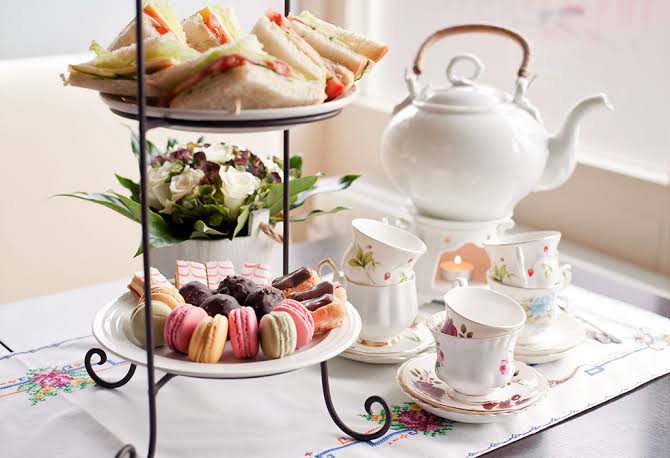
High tea is genuinely about presentation as much as the food itself, and the easiest way to create visual impact is by playing with height. A tiered cake stand loaded with your sweet and savoury bites naturally becomes the centrepiece of your table, drawing the eye immediately.
Layer in different textures around it, a table runner with some visible weave, mismatched vintage-style teacups if you have them, a scattering of fresh flowers in small bud vases rather than one large, overwhelming centrepiece. Wooden or ceramic platters work beautifully for finger foods that don’t need the formality of a tiered stand, giving your table a bit of variation rather than everything sitting at the same flat level.
Keep Music Playing Softly in the Background
This detail gets overlooked constantly, yet it genuinely shapes the entire mood of your gathering. Set up a Bluetooth speaker playing something instrumental, soft piano, gentle guitar, or even an orchestral cover of familiar pop songs, at a volume where it’s audible but never competes with actual conversation.
For a festive Indian high tea specifically, a light instrumental version of classical or semi-classical music works beautifully, giving the gathering a distinctly elegant, unhurried feel without pulling focus away from your guests actually talking to each other.
Don’t Skip the Small Details That Make It Feel Intentional
Little touches genuinely separate a thrown-together tea gathering from one that feels thoughtfully curated. Fold your napkins in a simple, elegant style rather than just laying them flat. Place a small printed or handwritten menu card near the tiered stand so guests know what they’re picking up. If you’re hosting a slightly larger group, consider a small favour, a mini jar of loose-leaf tea, or even letting a guest take home the teacup they used during the party.
These details don’t need to cost much, but they genuinely signal that you thought about the experience beyond just the food, which is exactly what makes a high tea feel special rather than merely functional.
Offer Self-Serve Options to Reduce Your Own Workload
This is genuinely one of the most practical pieces of hosting advice worth internalising. You don’t need to personally serve every guest throughout the entire gathering, doing so just adds stress and keeps you away from actually enjoying your own party.
Set up your tiered stands, teapots, and a small self-serve station where guests can pour their own tea and pick up food as they like. This works particularly well for high tea specifically, since the whole format is built around casual, unhurried grazing rather than a formally plated, course-by-course meal that requires constant hosting attention.
Let Go of Perfection and Focus on Warmth Instead
This is genuinely the piece that matters most, even though it’s the easiest to forget while you’re stressing over napkin folds and cake stand arrangements. A high tea gathering succeeds because of warm hospitality and genuine conversation, not because every single detail was flawlessly executed.
If a dessert doesn’t turn out quite as pretty as you imagined, or your table linens don’t perfectly match your theme, it genuinely won’t matter to your guests nearly as much as you think it will in the moment. What people actually remember afterward is how comfortable and welcomed they felt, not whether your napkin fold matched a Pinterest reference exactly.
Frequently Asked Questions
Q1. What’s the ideal time of day to host a high tea party for Indian guests?
Late afternoon, roughly between 4 PM and 6 PM, works particularly well in India, since it fits naturally between lunch and dinner without competing with either meal, and it matches the traditional evening chai timing most Indian households already follow.
Q2. How many food items do I genuinely need for a high tea to feel complete without over-preparing?
A good rule of thumb is three to four savoury items and three to four sweet items, arranged across a tiered stand or platters, which feels genuinely generous without requiring you to cook an overwhelming amount of food for a gathering that’s meant to feel light and unhurried.
Q3. Can I host an aesthetic high tea on a tight budget without it looking cheap?
Yes, genuinely. Focus your budget on a few visually impactful elements, fresh flowers, a nice table runner, a tiered stand if you don’t already own one, rather than spreading it thin across everything, and lean on homemade food and simple DIY touches like folded napkins and handwritten menu cards to fill in the rest.
Q4. What should I do if some guests don’t drink tea at all?
Always offer at least one non-tea option, a fruit-infused water, a simple mocktail, or even coffee for guests who prefer it, so nobody feels left out of the core experience even if tea itself isn’t their preference.